
Why Were Halloween Costumes Like That?
Story by @GIJoeRepairShop
Jerry Seinfeld famously said about Halloween costumes:
“Cardboard box, self-made top, mask included. Remember the rubber band on the back of that mask? That was a quality item there, wasn’t it? That was good about 10 seconds before it snapped out of that cheap little staple they put it in there with. You go to your first house: ‘Trick or…’ Snap! ‘It broke. I don’t believe it!’ … So I’m going out trick-or-treating but the mask’s rubber band keeps breaking and keeps getting shorter. I’m fixing it, it’s getting tighter and tighter on my face. You know, when it starts slicing into your eyeballs there and you – you’re trying to breathe through that little hole – getting all sweaty. ‘I can’t see, I can’t breathe but we gotta keep going, we gotta get the candy.’ And a half an hour into it you just take the mask: ‘Oh, the heck with it.’”
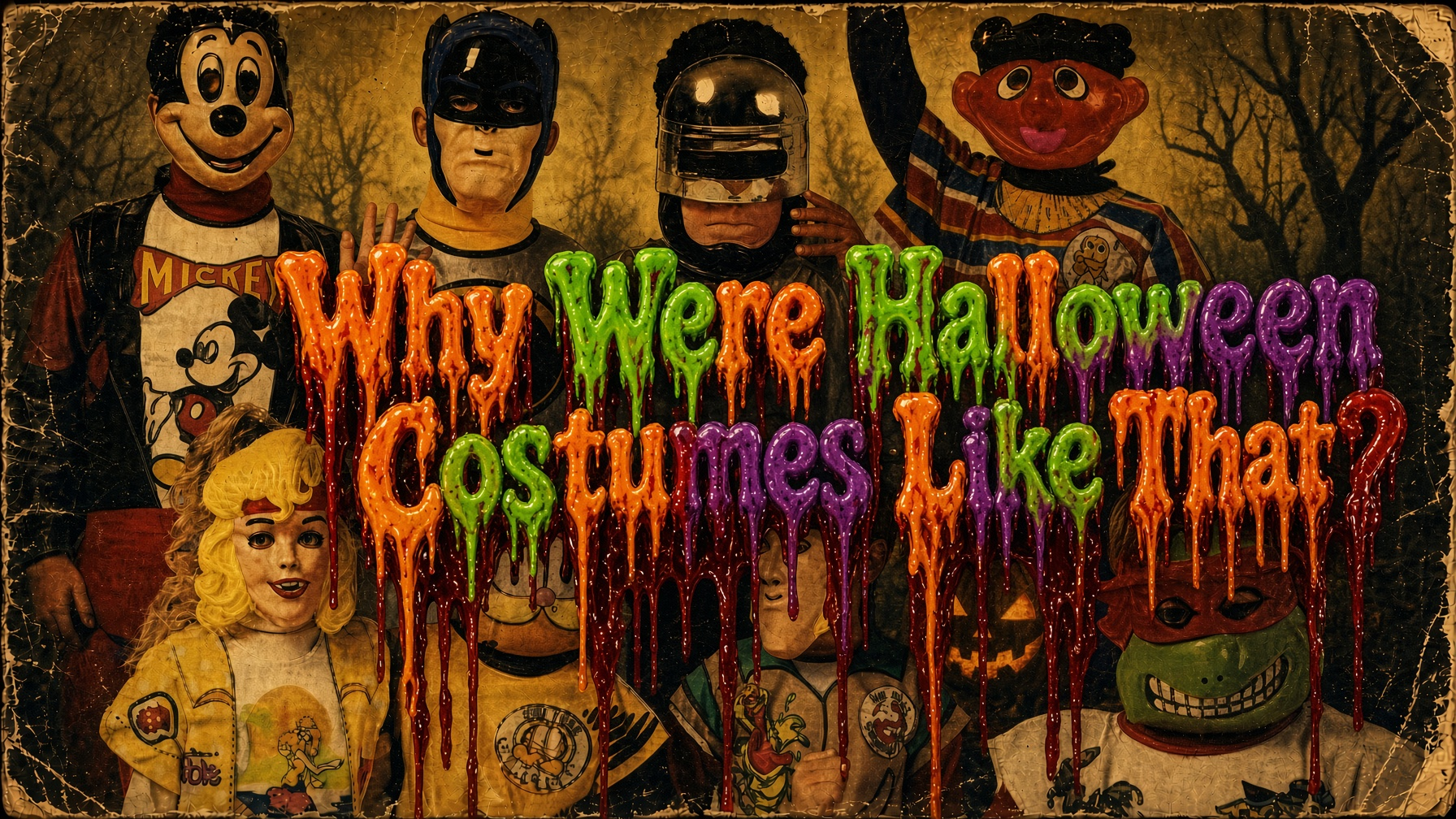
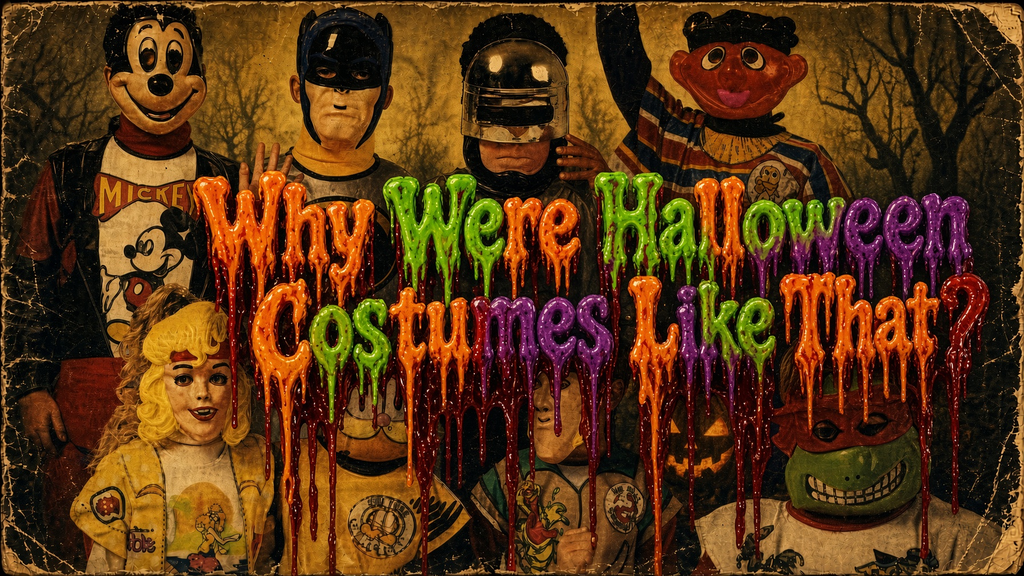
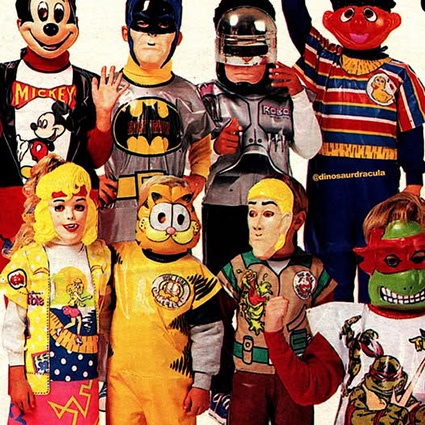
So, why were those costumes like that? Well, price has a lot to do with it. Price to manufacture, and the price that our parents were willing to pay for “complete” Halloween costumes. Most of the costumes that you probably associate with Halloween in the 1970s and 1980s come from a company called “Ben Cooper.” Ben Cooper Inc. was founded in 1937, as Halloween was becoming a more popular holiday in the United States. By 1984, it was the largest supplier of Halloween costumes in the country. The costumes typically consisted of a thin, vinyl or polyester smock. The smock was usually printed with an illustration of a licensed pop culture character or popular toy character, along with the character’s name. This was paired with a rigid, brightly-painted vacuform plastic face mask held on by the thinnest of rubber bands every produced.
The company became well known for licensing popular film and television characters and then getting their images onto store shelves quickly. It licensed Spider-Man in 1963, when the character was still virtually unknown. The company also licensed Batman in 1964. Indeed, the company was often the first to license anything depicting Marvel superheroes. The company also produced popular Richard Nixon and Ronald Regan masks (scary indeed!).
Unfortunately, Ben Cooper suffered heavy financial losses due to the Tylenol tampering of September 1982. That year, several parents refused to allow their children to trick-of-treat and costume sales plummeted. Sales would not recover for several years. In order to stimulate sales across the industry, the company, along with eight other manufacturers formed a “Halloween Celebration Committee” and, in cooperation with the Toy Manufacturers of America, published a booklet titled “13 Great Ways to Celebrate Halloween.” However, Ben Cooper’s financial problems had become so severe that by 1988, many customers left the firm and diverted licenses and business to its biggest competitor, Collegeville. Ben Cooper filed for bankruptcy in March 1988.
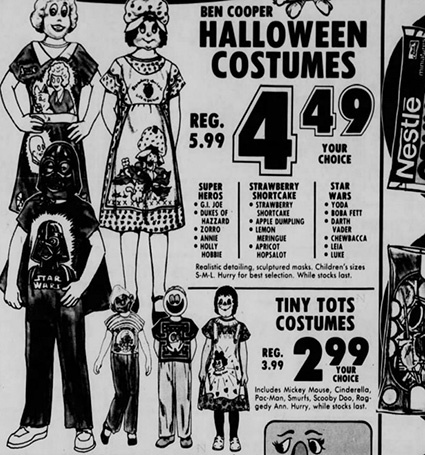
Today, original Ben Cooper costumes are highly collectible. This author has seen many for sale in antique shops across the United States. As with most vintage items, original costumes in original packaging, of popular characters, can fetch high prices on the resale market.
I recall a time when my homemade prop completely fell apart while I was walking home. That experience highlighted the inherent instability of those items.